
WORKSHOP
PLENARY LECTURES
- S. Landsberger, G. Bátor, T. Kovács, N. Kaitschuck, "An overview of neutron activation analyis in environmental radioactivity measurements"
- S.K. Sahoo, M. Rajamanickam, K. Inoue, "Precise measurement of 234U/238U and 235U/238U isotope ratios in soils and water using multi collector inductively coupled plasma mass spectrometry (MC-ICP-MS) and thermal ionization mass spectrometry (TIMS)"
- Tibor Kovács, "Why is it important to measure “difficult-to-measure” radionuclides? Their activity in environmental monitoring and in tracking compartmental"
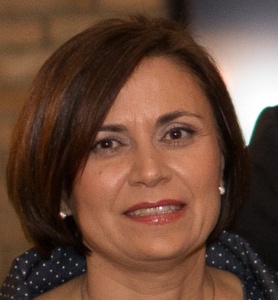
- Gordana Žauhar, "Radon measurement in Croatia"
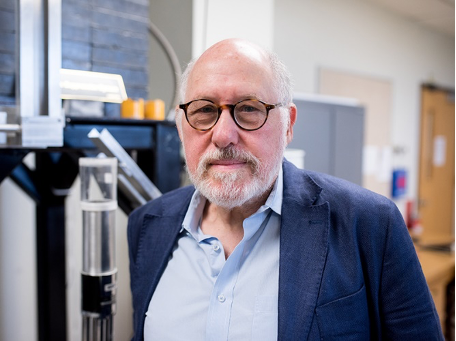
Professor Dr. Sheldon Landsberger is a Professor in the Nuclear and Radiation Engineering technical area. He has published more than 275 peer-reviewed journal articles, 11 book chapters and over 220 conference proceedings, primarily in the field of nuclear analytical measurements and their applications in nuclear forensics, natural radioactivity, and environmental monitoring of trace and heavy metals. He has an h-index of 42 and more than 9,390 independent citations, according to his Google Scholar profile (https://scholar.google.com/citations?user=9uLV4ZEAAAAJ&hl=en). He has graduated 46 PhD and 110 MS students. In 2007, he received the Arthur Holly Compton Award from the American Nuclear Society for outstanding achievements in education in nuclear science and engineering, recognizing his role in designing and implementing one of the most advanced distance-learning programs in the nation for nuclear engineers. In 2005, he received the Glenn Murphy Award from the Nuclear and Radiological Division of the American Society for Engineering Education in recognition of his significant professional contributions to the teaching of undergraduate and graduate nuclear engineering students. Dr. Landsberger served as Director of the UT Nuclear Engineering Teaching Laboratory (NETL) from 2002 to 2006 and as Area Coordinator of the Nuclear and Radiation Engineering Program from 1997 to 2012 and 2017 – 2024. He currently holds the Robert B. Trull Chair in Engineering at the Cockrell School of Engineering. Since 1988, Dr. Landsberger has served the International Atomic Energy Agency as an expert consultant in various capacities.
WORKSHOP
The RAD 2026 Conference will host a dedicated Workshop on Environmental Radioactivity and Radiation Protection, providing a unique platform for researchers in the field to present their outstanding work and engage in discussions with colleagues.
Topics covered include:
1. Environmental Radioactivity: Sources, Distribution, and Processes
- Terrestrial, marine, and cosmogenic radionuclides
- Radionuclide kinetics, mobility, and environmental modeling
- Radionuclides as tracers of environmental processes
- Radiochronology: 210Pb, 230Th/234U, 14C, 40K–40Ar, 40Ar/39Ar, 238U–206Pb, 235U–207Pb, 87Rb–87Sr, 147Sm–143Nd, 3H, 36Cl, 26Al–10Be dating
- Other chronometric methods: Luminescence dating (OSL, TL), Cosmogenic nuclide dating
2. Measurement Techniques, Radiochemistry, and Analytical Developments
- Radiochemistry and quality assurance
- New measurement techniques
- Advances in analytical technologies and reference materials
3. Radiation Monitoring, Mapping, and Facility-Related Impacts
- Radiological monitoring of nuclear facilities
- Environmental impacts of nuclear facilities and decommissioning
- Radiation accidents, Radon, and Thoron mapping
4. Environmental and Public Exposure: Assessment and Mitigation
- Dose assessments
- Radionuclide content in food, water, and building materials
- Radon mitigation and NORM-related issues
5. Regulations, Standards, and Emerging Challenges
- Regulatory updates related to radionuclides
- New challenges in environmental radioactivity research
- Progress in radioecology and public awareness
The contact person is Dr. Róbert-Csaba Begy, workshop chair, at email: robert.begy@ubbcluj.ro